Possible Minds, illustrated
Six essays from John Brockman's Possible Minds (2019), read for multi-agent orchestration, cybernetics and Minsky's Society of Mind, plus the open questions they leave. Each page sets the companion essay's own text beside a plate that paints the step you are reading.
Three figures recur throughout: Mira, who builds things; Tally, the machine, whose needle, bulb and paper tape show what it reads, does and reports; and the wren, who points the way.
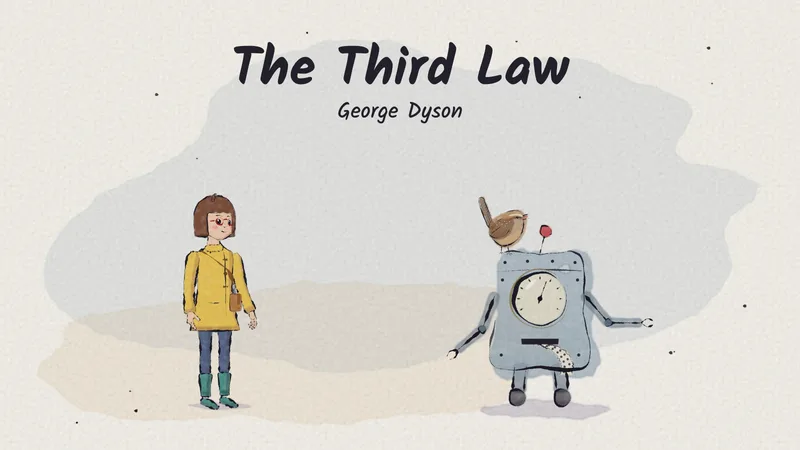 George DysonThe Third LawDyson's three laws, drawn: why control, not intelligence, is what emerges when analog behaviour returns on a digital substrate.
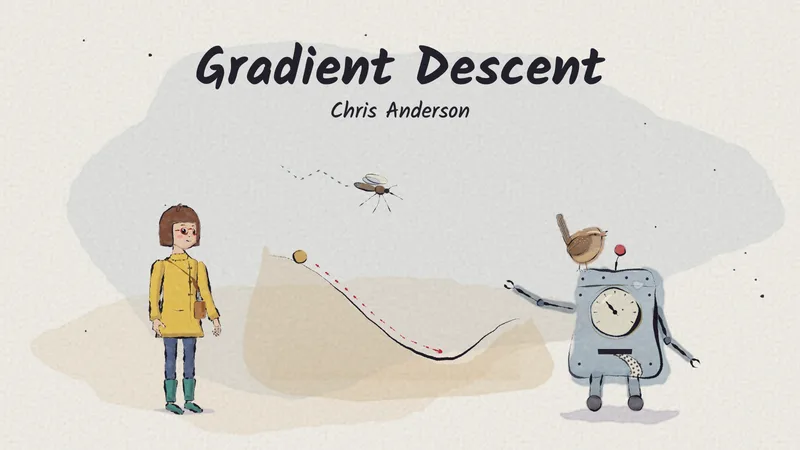 Chris AndersonGradient DescentAnderson's gradient descent, drawn: one mosquito's rule, the local minimum, the escapes from it, and what they mean for orchestrated agents.
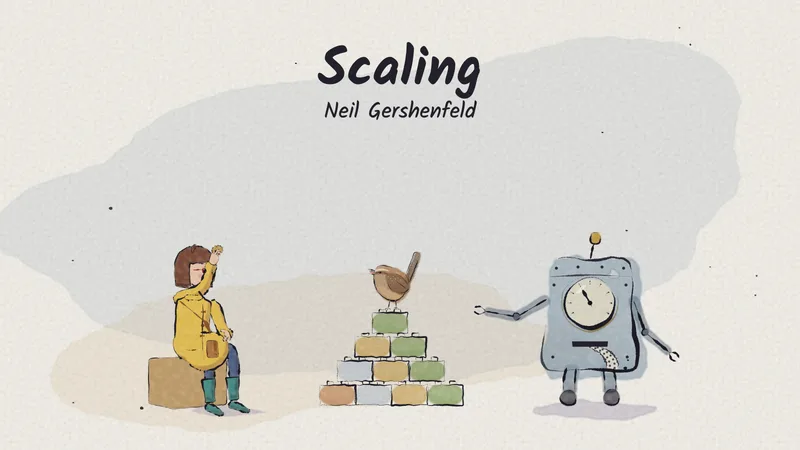 Neil GershenfeldScalingGershenfeld's scaling laws, drawn: how error correction below a threshold made communication, computation and representation reliable, and why fabrication is next.
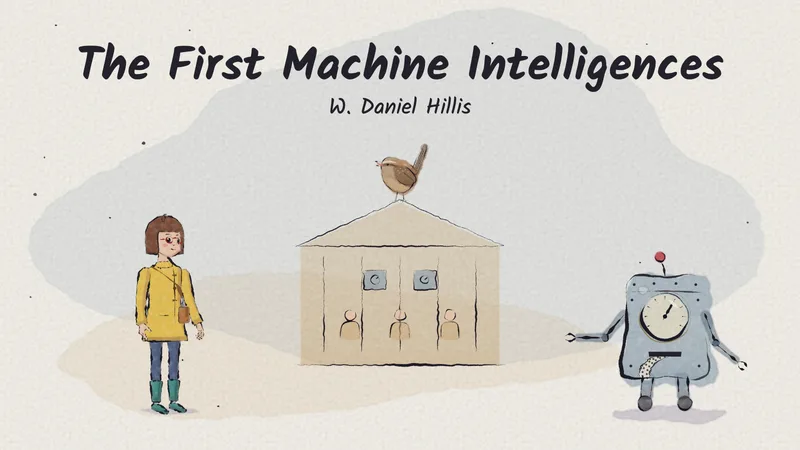 W. Daniel HillisThe First Machine IntelligencesHillis's essay, drawn: corporations and nation-states as hybrid superintelligences with emergent goals, and cybernetics as the study of how the weak control the strong.
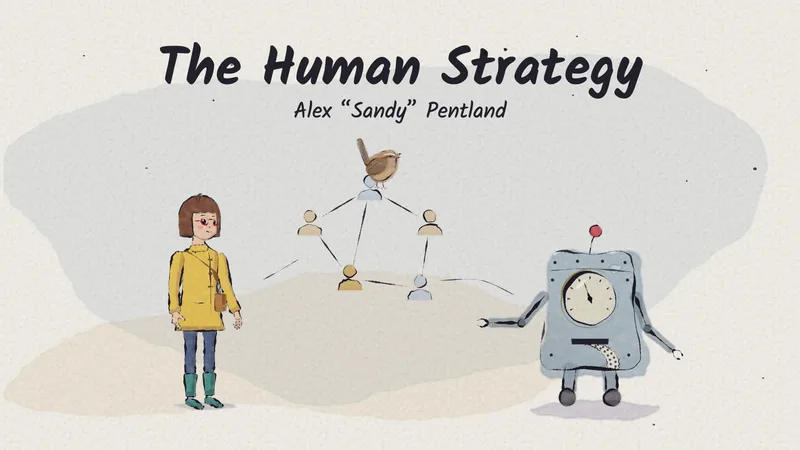 Alex “Sandy” PentlandThe Human StrategyPentland's human strategy, drawn: credit assignment over a network whose neurons are people, kept honest by truthful feedback and auditable data.
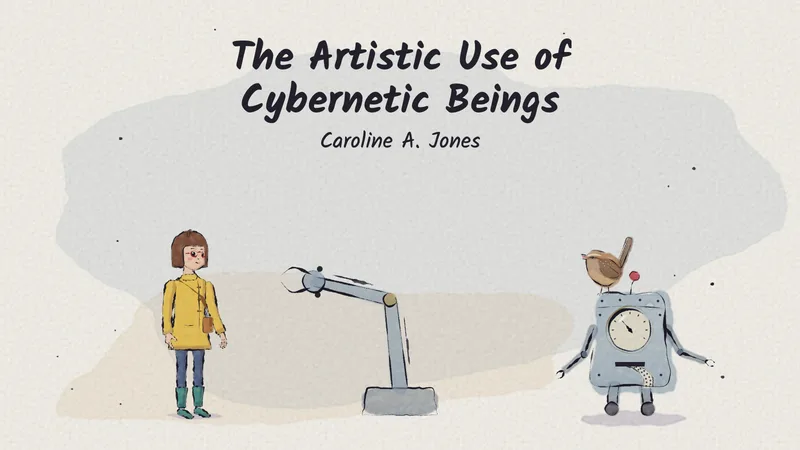 Caroline A. JonesThe Artistic Use of Cybernetic BeingsJones's cybernetic artworks, drawn as mechanisms: beings that come alive only when coupled to people and places, set against disembodied, task-fragmenting AI.
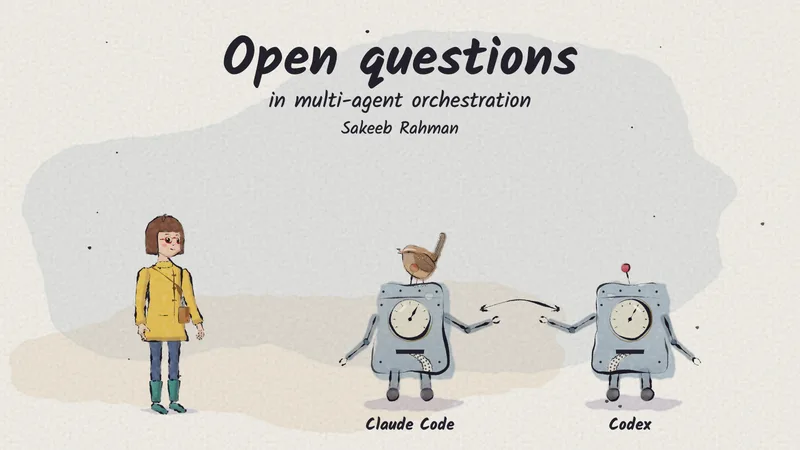 Sakeeb RahmanOpen QuestionsThirteen open questions in multi-agent orchestration, ranked and drawn, each with the minimal experiment that would test it.